
What I played: Blossom Tales & ICEY
Like all January’s, 2019 has kicked off with a need to re-center myself. After a week of drinking, indulging, and lounging about with family and friends I find myself taking the first steps towards establishing a new equilibrium. My goals for 2019 are to better manage my diabetes, to avoid holding myself to the standards of others (and being unhappy when I find myself lacking), and to take more advantage of the simple pleasures I have in my life now (the view from my balcony, the short walk to the beach, etc.) rather than worrying about my future.
Although much of the past week has consisted of getting back into the swing of my PhD studies, I have managed to find time for some time at the beach, catching up on podcasts (Waypoint Radio and Giant Bomb‘s end of year stuff), and even some time for games.
The first game I finished in 2019 was one I actually started in late 2017: a Switch game called Blossom Tales. Blossom Tales is an action-adventure game with light puzzle elements and progress is measured via conquering dungeons. So basically, it’s a lot like The Legend of Zelda: A Link to the Past, albeit a lot shorter and with a small-studio budget behind it. It’s a small and satisfying morsel for that sort of game, even if it didn’t quite manage to charm me the way A Link to the Past does. The game is presented to you as a story being told by a grandfather to his grandkids, very much in the vein of a fairy tale or a simple fantasy adventure for children – one where the kings are good and the brothers of kings are evil. The framing of the game is cute, even if it mostly takes a backseat in favor of the story – which is pretty generic, bare-bones and largely lacking in any real characters.
For 2019 I have made a list of some of the smaller games I’ve bought, particularly for the Switch, that I want to actually get around to playing. The next one on my list was a game called ICEY. Boy, do I have thoughts on ICEY.
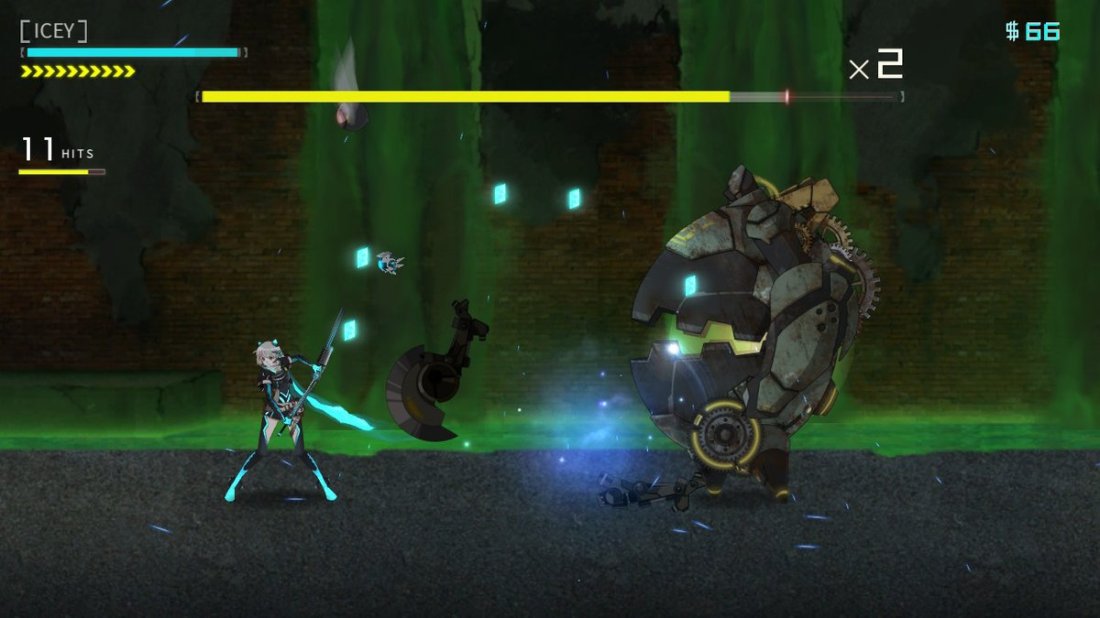
At first blush, ICEY is a 2D side-scrolling action platformer that appears to be borrowing heavily from the aesthetics of classic cyberpunk anime, particularly Ghost in the Shell. Mechanically, I thought it was perfectly serviceable. It was a little button-mashy and the enemies tended to be able to take too much damage for my liking, making the combat feel a little tedious. Also, just about every boss you encounter in the game is accompanied by one or two of the exact same pesky flying drones that have small hitboxes, hover at a height that is awkwardly just below the arc of your own jump, and an enthusiasm for hitting you with lasers from the other side of the screen and juggling your useless, limp android body for just enough time for it to feel boring, as well as just a little unfair.
But as I said, gripes with the combat aside, the way the game plays is fine enough. What really got to me was the narrative being told. ICEY simply isn’t as clever as it thinks it is. The whole game is narrated by a voice telling you where to go (“follow the arrows”) and what to do (“kill Judas”). Now if you’re thinking ‘ooh that sounds clever, I bet they play around with that and do interesting things’ you would only be partly right. If you play the game “straight”, obeying the voice at every turn, the game is pretty non-eventful and doesn’t really reveal anything about itself to you. Throughout the standard play-through you will come to branching paths where the voice over will remind you “the arrows will never steer you wrong”. At other moments you will be passing through an abandoned town or a polluted waterway and the narrator will say something like “oh this village used to be nice and now it’s in ruin. Probably because of Judas” or “this area is disgusting, I bet that’s Judas’ doing because he is the bad guy”. In other words, the game spends a lot of time basically screaming at you “I am very clever and I am concealing things from you! I am making a commentary about blindly obeying instructions.” Which, ya know, can be clever. We know it can, because any number of other clever games like Spec Ops: The Line and The Stanley Parable have already played with this and been celebrated for doing so. ICEY’s own attempt at the same trick pales in comparison to these other games, and I walked away from it feeling annoyed by it.
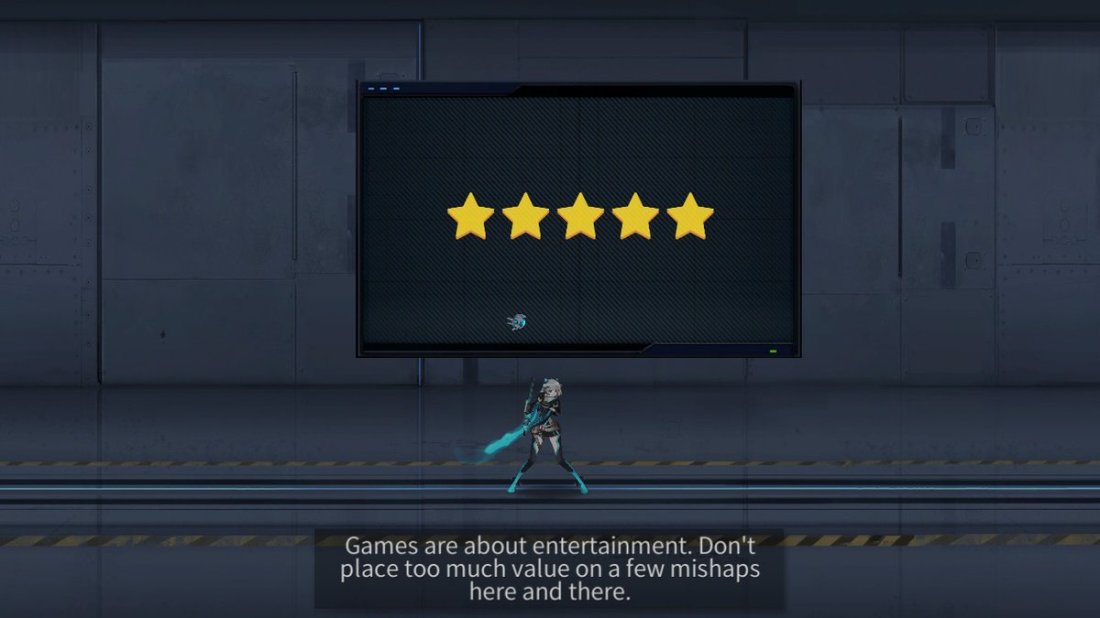
So the game has multiple endings, each attached to a moment where you disobey the narration – who is unsurprisingly revealed at one point to be the game’s creator. It’s pretty easy to guess this would be the case because, again, better games with more impact have already done this exact thing and the voice acting itself is a very specific combination of very amateur and very obviously pleased with how clever it thinks the writing is.
It isn’t.
Often choosing another option, or choosing to do nothing, ends up requiring a lot of waiting around not doing anything whilst the voice over rambles on – either expressing completely unconvincing exasperation, fumbling through some completely inadequate psychoanalysis of the player, or poorly delivering a joke. I didn’t stick around long enough to see all the endings, but none of the ones I saw landed for me.
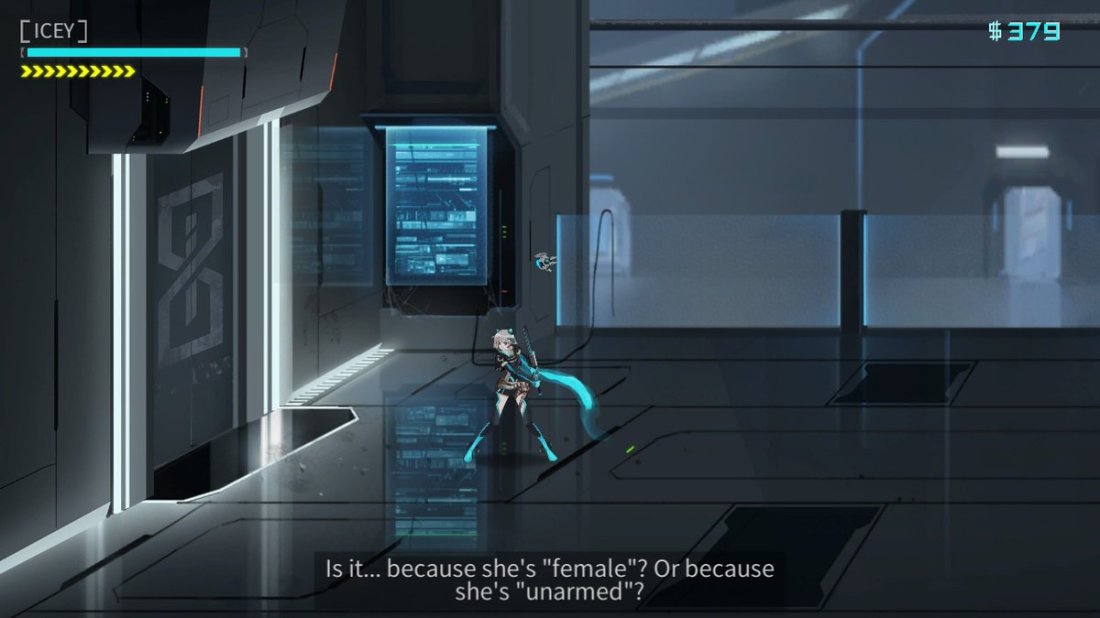
At this point you are tasked with reliving many of these dull combat encounters so you can get back to all the bits where you chose to go one way, and instead go the other. Any hopes you had that this might be a cool Ghost in the Shell style cyberpunk game are dashed and instead the game becomes a chore trying to push against every boundary in the game like you’re playing a bad adventure game.At this point you’re basically strip mining the game to find the fun and the purpose of playing, but the things I unearthed only ever annoyed me that I had put in any extra effort to find them.

